



How to structure a financial department to run a global business
Discover the best finance team structure for global businesses, with best practices, automation tips and a step-by-step guide for international growth.

A single-use virtual card protects main account details and reduces the risk of unauthorised charges, but may increase the administrative burden for cardholders and companies alike. Find out everything you need to know about a virtual credit card for business and alternative solutions.
A single-use virtual card is a digital debit card that can only be used for a single transaction or for a very limited period of time. These virtual Mastercards or VISA cards are often used in e-commerce to increase security for online payments.
A virtual credit card for business adds an extra layer of security, as each time your company makes a payment, you’re given a unique card number, which keeps your main account details completely private.
Since the card number automatically becomes invalid after a purchase, they are particularly well protected against fraud and misuse. Unlike physical cards, a virtual debit card only exists digitally, so users can generate their card details when needed and use them immediately without having to carry a physical card with them.
Once you’ve completed a purchase, vendors won’t be able to use the same details to charge you again. And no need to worry about refunds – they can still be processed with the original card number, so you’re covered if you need to return an item.
Virtual cards are an excellent solution for businesses aiming to simplify accounts payable and other corporate credit card expense management functions. They offer employees and vendors greater flexibility, reduce exposure to fraud, and can lower costs throughout the payment process.
The following sections show how a single-use virtual card can be used in different scenarios:
The debit card is the standout feature that adds an extra layer of convenience when organising and managing spending.

Founder and Owner, Luxury-safari.travel
While a single use virtual card offers security and spending control, it might offer more bureaucratic burdens and costs compared to regular debit cards.
| Pros | Cons | |
|---|---|---|
| Security | Provides enhanced security by generating unique, single-use card numbers for each transaction, reducing fraud risk. | Some virtual card providers may have limitations on card usage, potentially impacting convenience. |
| Spending control | Allows businesses to set precise spending limits on each card to prevent overspending. | Limited transaction flexibility can sometimes hinder purchases outside set parameters. |
| Expense tracking | Simplifies expense tracking, as each transaction is automatically recorded and easily traced. | May require integration with other accounting software for comprehensive reporting. |
| Bureaucracy | Might streamline authorisation processes, as employees don’t need to wait for approvals. | Bothersome for employees needing to add multiple or repeat purchases. |
One of the main benefits of a virtual card for business is enhanced security, as each transaction generates a unique card number, which significantly reduces the risk of fraud and protects sensitive financial information.
Additionally, virtual cards provide better spending control by allowing businesses to set specific limits for each card, helping to prevent overspending and ensuring that expenditures remain within budget.
They also simplify expense tracking, as all transactions are automatically recorded, depending on the provider and financial system. Furthermore, against common knowledge, a refunds process is possible, as the transaction is linked to your information, even when the card is deactivated.
Key Benefits:
While virtual cards offer various benefits, there are also some drawbacks to consider. One significant con is the administrative burden they may impose. Implementing a virtual card system often requires changes to existing processes, additional training for employees, and integration with accounting software, which can increase workload and complexity.
Another limitation is that virtual cards are not ideal for recurrent payments. Since they are designed for one-time usage, businesses may find it challenging to manage subscriptions or recurring transactions without creating multiple virtual cards, which can complicate the payment process.
Key Drawbacks:
Even though a single-use virtual card offers multiple advantages, such as increased security, the disadvantages may discourage companies from changing their current financial systems. Single-use cards might be valuable for strict one-off purchases, but are unsuitable in many scenarios, such as fuel card for business or company travel card.
Therefore, businesses might look for providers that are able to keep all the advantages of a single-use virtual card, while mitigating the disadvantages.
This is where amnis comes into play.
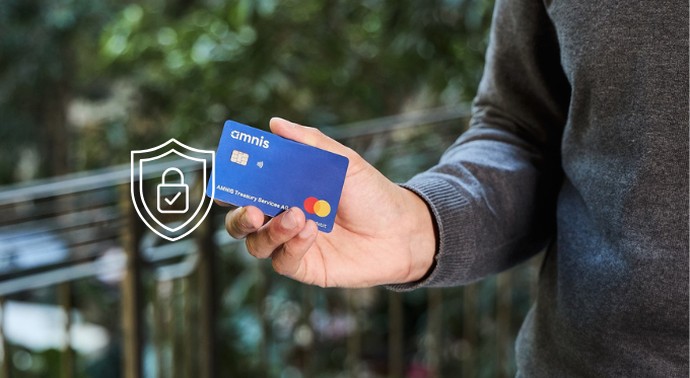
amnis’ multi-currency debit card separates users from administrators, which adds an extra layer of security. Administrators can set custom blocking dates, while a public API supports full automation of the card creation and blocking process, which is ideal for larger scale card usage, e. g. for travel agencies or e-commerce companies. Card details can also be shared instantly via email or SMS – the recipient gets a secure link, verifies via two-factor authentication, and can use the virtual card immediately, with no login or setup required.
This combination of features ensures that businesses can effectively handle both recurring and one-off expenses while maintaining robust oversight and security.
With amnis multi-currency debit card, companies enjoy all the advantages of a single-use virtual card without their disadvantages. amnis issues virtual and physical debit cards, which separate users from administrators and offer functions such as custom blocking dates to enhance security.
Further, amnis offers access to its financial ecosystem, which decreases cross-border payments while increasing transparency.
Open a free and completely non-binding demo account in 30 seconds to test our platform and improve your financial processes.