Top 5 Airwallex business account alternatives in 2026
Avoid high FX fees, limited features, and unclear pricing with our top 5 Airwallex alternatives overview. Find the best payment provider for your business!




For businesses of any size, managing foreign currencies makes a significant difference. Whether it’s for international trade, hedging against risks, or holding assets in stable currencies, a multi-currency account or a foreign currency savings account provides flexibility, protection, and opportunities for growth. Find out which option suits your financial goals.
A foreign currency savings account is usually a bank account that allows businesses to hold deposits in currencies other than their domestic one. Instead of converting money into the local currency upon receipt, companies can retain it in its original denomination. This provides the flexibility to pay suppliers, employees, or partners directly in foreign currencies without additional conversion costs.
Such accounts are particularly valuable for businesses engaged in cross-border operations, import-export activities, or those with global partners. They may also earn interest in the chosen foreign currency, depending on the provider and market conditions.
A foreign currency savings account offers several advantages, such as reducing costs related to foreign trade while offering natural hedging against foreign currency risk.
To see how much your business could save on FX, cards, and payments, try the free amnis cost savings calculator.
What is a multi-currency account? Unlike traditional banks, where each account is tied to a single currency, these different business bank account types consolidate multiple currencies under one account structure. This improves efficiency, reduces fees, and supports broader international payment capabilities.
| Foreign Currency Savings Account | Multi-Currency Savings Account | Multi-Currency Savings Account | |
|---|---|---|---|
| Provider | Banks | Fintech providers | Fintech providers |
| Target users | Businesses with limited international exposure | Businesses with global operations or frequent cross-border transactions | Businesses with global operations or frequent cross-border transactions |
| Currencies supported | Limited, often major currencies only | Wide range, including niche currencies | Wide range, including niche currencies |
| Account structure | 1 account per currency | 1 account for multiple currencies | 1 account for multiple currencies |
| Flexibility | Low – requires opening multiple accounts for each currency | High – manage all currencies in one place | High – manage all currencies in one place |
| Convenience | Moderate – traditional banking procedures | Very high – digital-first access, instant setup | Very high – digital-first access, instant setup |
| Fees | Higher maintenance fees and additional costs | Transparent pricing and low maintenance fees | Transparent pricing and low maintenance fees |
| Interest rates | Often minimal | Competitive, varies by currency and provider | Competitive, varies by currency and provider |
| Special features | Limited | Local payment scheme access, company debit cards, competitive FX rates, API integrations | Local payment scheme access, company debit cards, competitive FX rates, API integrations |
From cross-border trade and company debit cards to local payment schemes – a multi-currency savings account offers businesses much more than just holding different currencies.
Companies engaged in global trade can receive payments in various currencies and pay suppliers directly without converting funds. This reduces foreign exchange costs and ensures plannable transactions across different markets, so that companies don’t need to worry about fluctuating exchange rates.
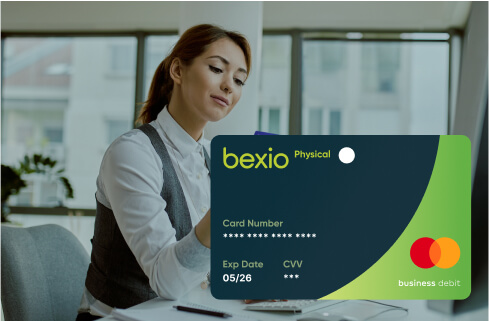
Multi-currency accounts often come with debit cards, which are linked to all account currencies. This means foreign currencies are directly deducted, which allows employees to make business purchases abroad without facing expensive conversion fees, while the company maintains full visibility and control.
Multi-currency savings accounts allow businesses to gain access to local payment networks like SEPA in Europe (including SEPA Instant, which became mandatory for EU banks in October 2025), ACH in the US, or FPS in the UK. This enables them to send and receive payments as if they had a local bank account, which significantly reduces costs and transaction times.
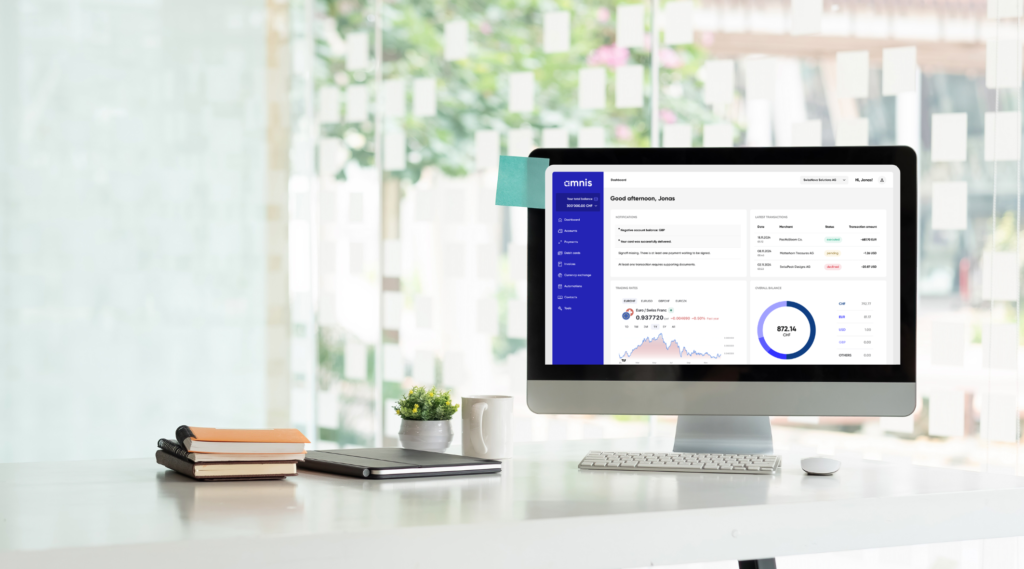
Managing international finances doesn’t have to be complex. amnis brings together the reliability of a secure savings account with the agility of a modern fintech solution. With a single account, your business can hold, send, and receive 20+ currencies, which eliminates the need to open a business account with separate foreign currency accounts at your local bank.
Set up your free demo account to experience all global trading advantages.